
The Chaitra Purnima sky
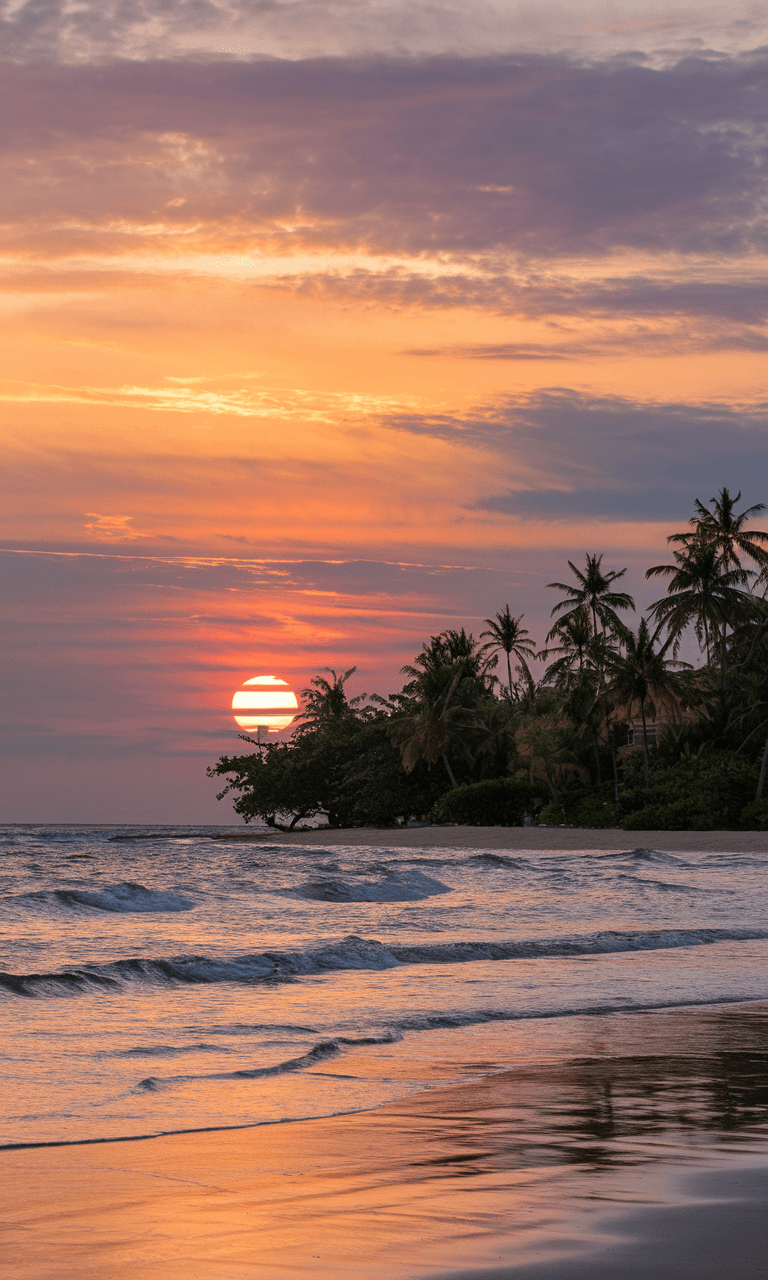
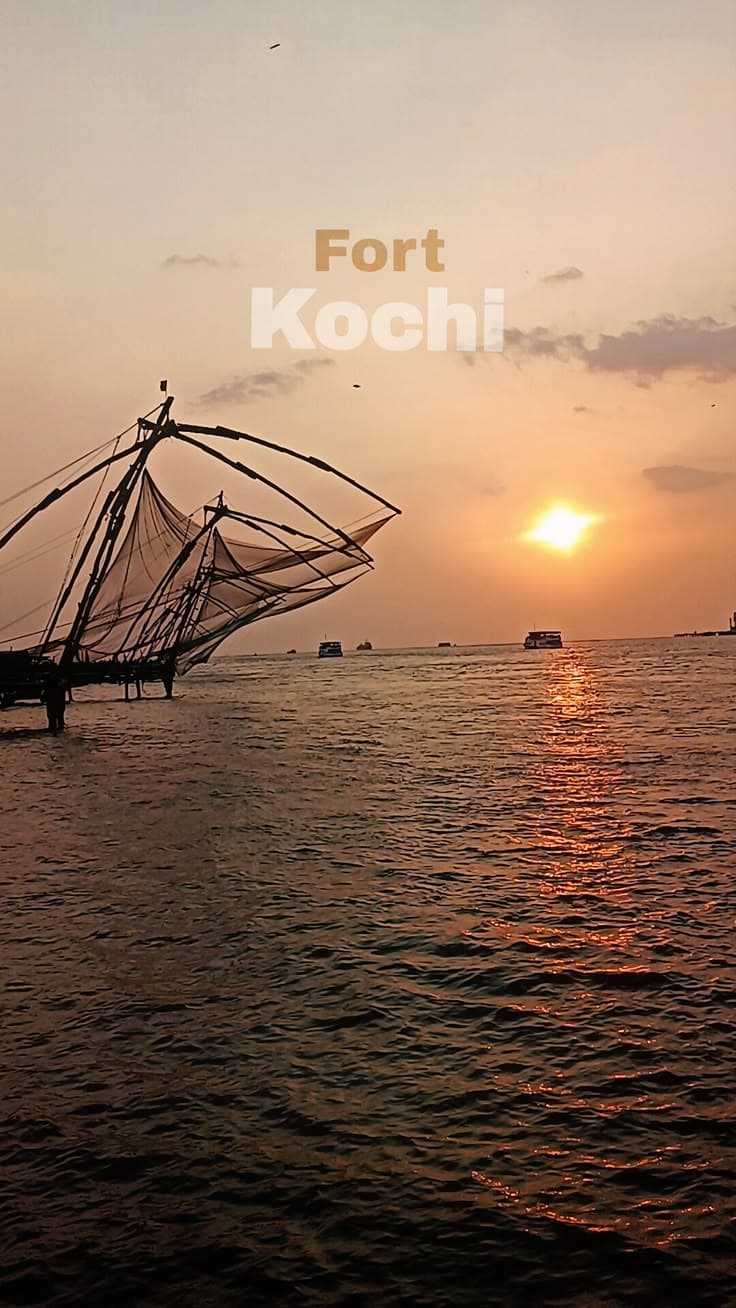
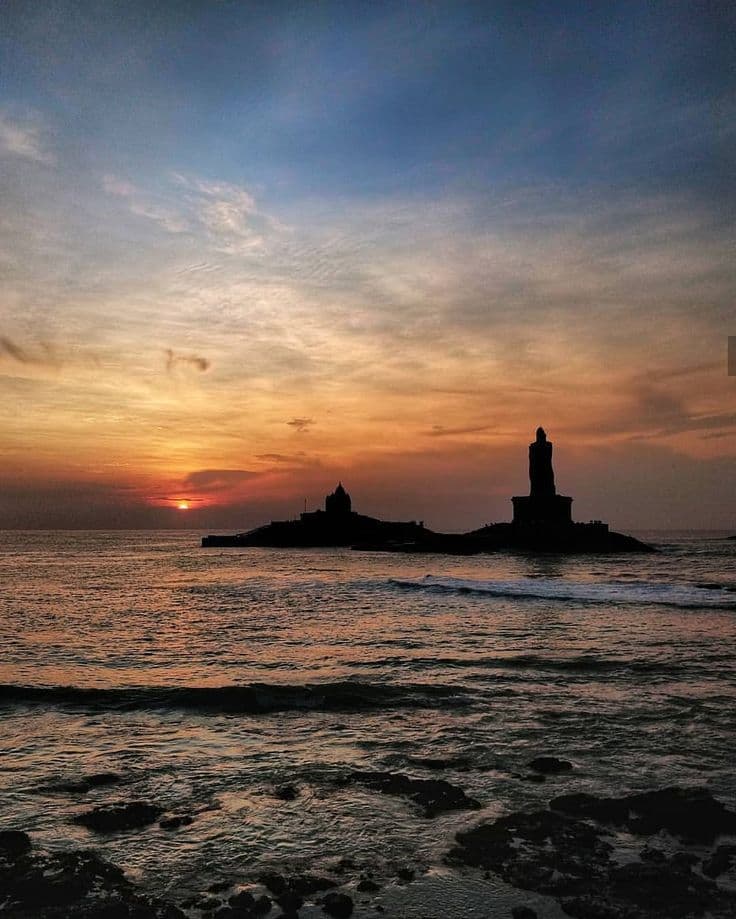
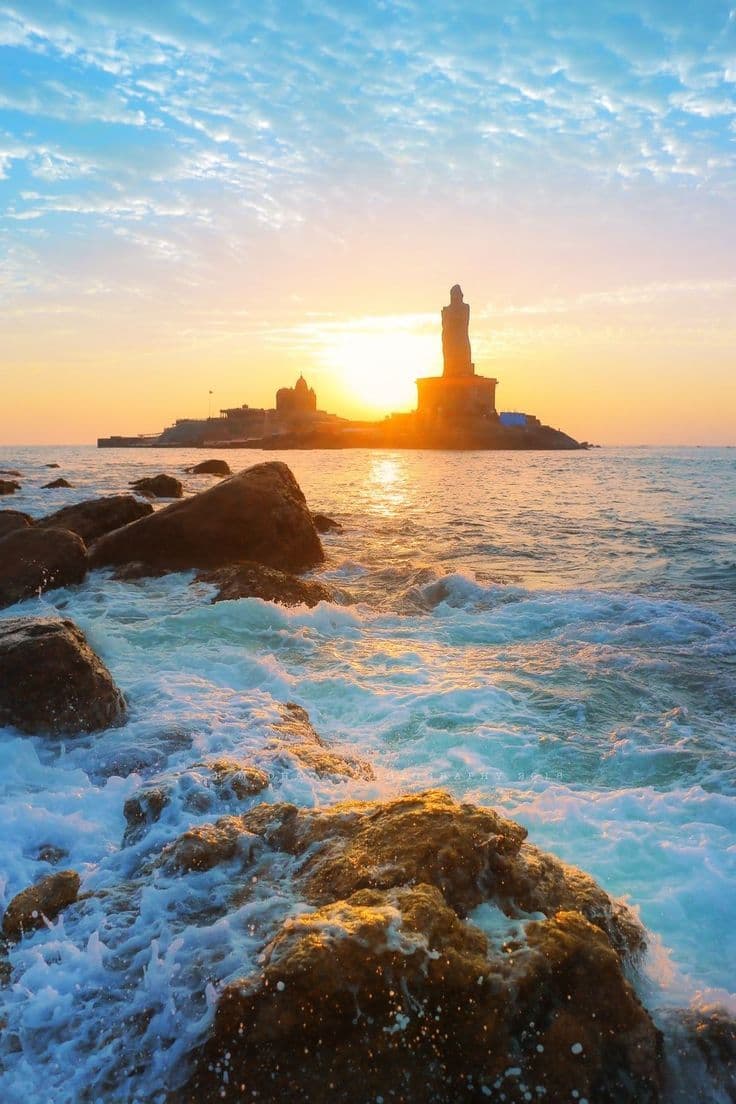
One specific astronomical accident built Kanyakumari's reputation. On Chaitra Purnima — the full moon of the Tamil month of Chitirai, usually April — the sun sets directly over the Arabian Sea to the west while, simultaneously, the moon rises directly over the Bay of Bengal to the east. Both events fit inside a single panoramic glance from Sunset Point. The window lasts about two hours. For most people it is the closest they will get to seeing the sky as a single, symmetric, living machine. Across the rest of the year, sunrise still arrives over the Bay and sunset still drops over the Arabian — but not on the same horizon. For that, the moon must be full, the sky must be cloudless. Locals know the next alignment two weeks ahead.
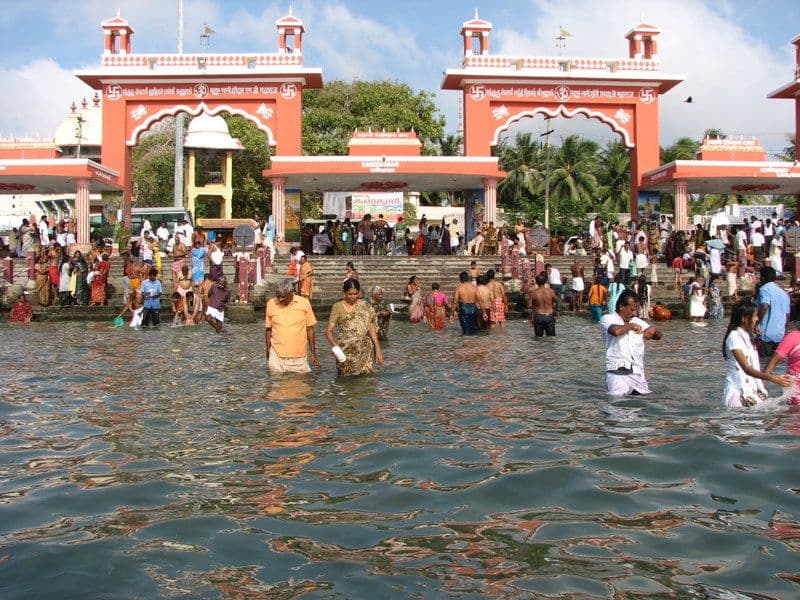
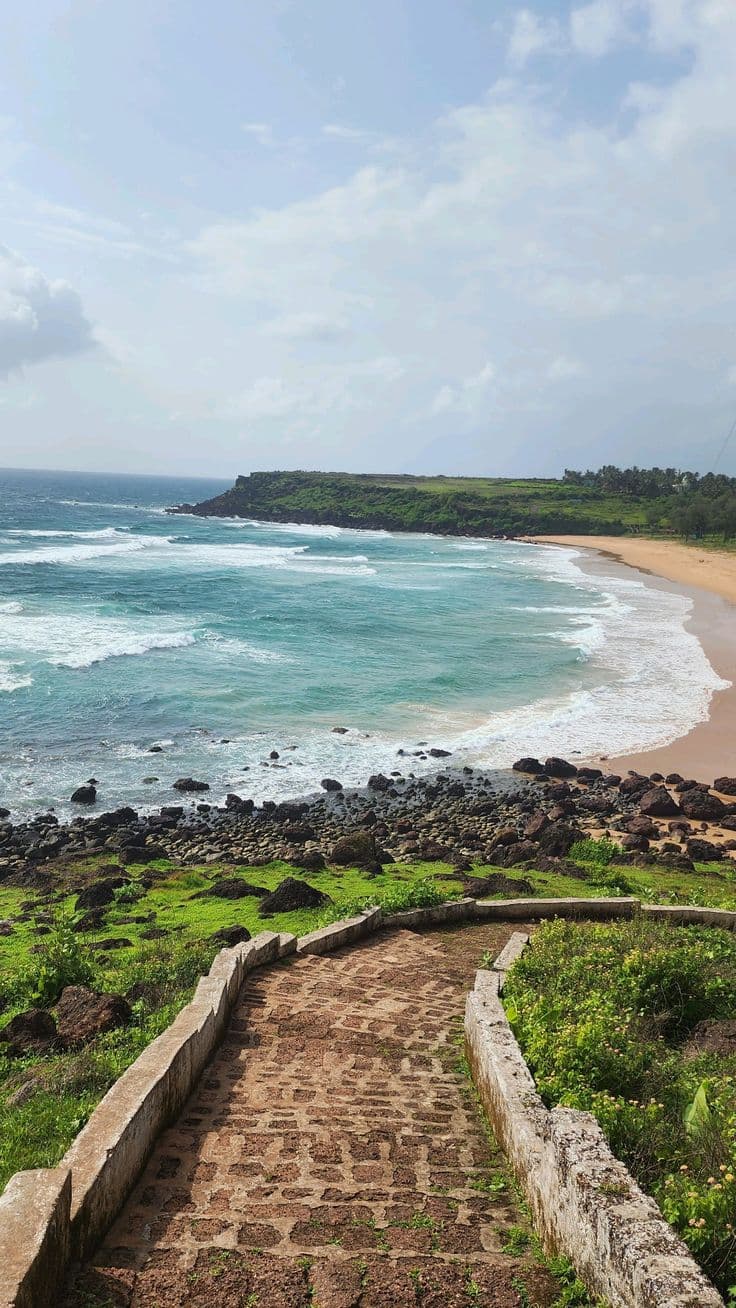
Drive six hours south from Madurai and the land narrows to a point. Coconut palms thin into salt pans, salt pans thin into fishing villages, and the last village ends at a stone pier where, on a clear morning, you can see an unbroken horizon curve 180 degrees from a single vantage — Arabian Sea on the right, Indian Ocean straight ahead, Bay of Bengal on the left. The only place on the Indian subcontinent where three seas visibly meet. The settlement is Kanyakumari, named for the goddess Kanya Kumari (the 'Virgin Kumari') who, in Puranic tradition, has watched this spot for millennia — waiting on a marriage to Shiva the gods thwarted so she might remain vigilant over India's southern cape.
The rock where a monk changed India
December 1892. A young, obscure Hindu monk named Narendranath Datta — later Swami Vivekananda — reached Kanyakumari at the end of a three-year walking tour across British India. He swam the half-kilometre to a mid-sea granite outcrop that older tradition linked to Kumari Devi's meditation, climbed onto it, and stayed in silence for three days and three nights. What crystallised from those nights — poverty, religious fragmentation, colonial humiliation, the vast sadness of an Indian homeland — became the founding vision of the Ramakrishna Mission a year later. The rock then sat empty for 78 years. In 1970 the Kendriya Vivekananda Rock Memorial Committee completed a Dravidian-style mandapa directly on it. Today, 10,000 people make the ten-minute ferry crossing daily.
The 133-foot poet beside him
A second rock, 100 metres east, gained a new tenant in 2000: the Thiruvalluvar Statue. A 133-foot monolithic stone portrait of the Tamil poet-philosopher who composed the 2,000-year-old Thirukkural — a 1,330-couplet ethics treatise that is arguably the oldest surviving body of secular moral philosophy in any Indian language. Every dimension is coded. The height of 133 feet encodes the Kural's 133 chapters. The 38-foot pedestal represents the 38 chapters on Aram (virtue); the upper 95 feet maps to Porul (wealth) and Inbam (love). Together the Vivekananda Rock and the Thiruvalluvar Statue carry on a conversation — a 19th-century monk and a 2nd-century Tamil poet, 100 metres apart in the same sea.
Beyond the tip: Padmanabhapuram and Kovalam
Kanyakumari anchors a three-day southern arc. Thirty-six kilometres west, the wooden palace of Padmanabhapuram (1601, Travancore kings) is the largest surviving wooden palace in Asia — 1,200 cubic feet of carved rosewood, teakwood and jackfruit-wood in one continuous structure. Eighty-five kilometres north-west, across the Kerala border, Kerala's backwaters begin at Neyyar and drift up through Kovalam and Varkala's red cliffs. Twenty kilometres up the coast sits the 9th-century Suchindram Thanumalayan Temple, enshrining the three-in-one form of Brahma, Vishnu and Shiva — a rarity worth the detour.
What to eat, wear, and avoid
- Fish thali at Hotel Saravana Bhavan's annex by the ferry jetty — Kanyakumari's fisherman meal, ₹320, with appam and parotta alternatives.
- Never swim at the tip. The convergence of three seas produces cross-currents fatal to even strong swimmers. Stay on the pier; do not wade.
- Dress modestly at the Kumari Amman Temple. It remains an active shrine, and the virgin goddess is strict on codes.
- The sunrise ferry to Vivekananda Rock starts at 8 a.m. Arrive by 7 to beat a two-hour queue, especially in peak season (December–February).
- Skip the crowded Sunset Point on 31 December — traffic jams stack up 5 km into town.
Where Kanyakumari sits in your wider yatra
The southern tip anchors Tamil Nadu's two-week pilgrimage loop: Madurai → Rameswaram → Kanyakumari → Varkala → Kerala backwaters. Many travellers fly into Trivandrum (90 km), overnight in Kovalam, then drive down — three hours along the coast. The nearest railway station is Kanyakumari itself, with daily direct trains from Delhi (the Himsagar Express covers 3,785 km, India's longest single train route). Browse pilgrimage and beach destinations for more southern options.
“Stand at Kanyakumari long enough and you realise the map of India is not a country. It is a single pointed finger, laid on the sea, asking a question.”

About the author
Shreya RaoAdventure · Solo
Delhi-based solo traveller and adventure writer mapping high-altitude trails, motorcycle routes and quiet Himalayan villages from Spiti to Sikkim.
More from Shreya RaoFrequently asked questions
- How many days do I need in Kanyakumari?
- Two days is comfortable — one for the Vivekananda Rock, Thiruvalluvar Statue, Kumari Amman Temple and Gandhi Mandapam; another for Padmanabhapuram Palace (36 km) and Suchindram Temple. If you can time Chaitra Purnima (April full moon), add a third evening at Sunset Point for the sunset–moonrise spectacle.
- Is Kanyakumari safe for solo female travellers?
- Yes. It is a pilgrimage town with heavy year-round tourist traffic, visible police and an early-evening wind-down (most shops close by 9 p.m.). Stay in the town (not the outskirts) and use registered ferries only. Dress modestly in the town temples.
- Can I combine Kanyakumari with Kerala?
- Absolutely. Kanyakumari is 90 km from Trivandrum airport (1.5 hours by road), so it pairs seamlessly with {{link|/blog/kerala-backwaters-gods-own-country|Kerala's backwaters}}, {{link|/place/varkala-cliffs|Varkala}} and Kovalam. A common 5-day route: fly into Trivandrum, backwaters in Alappuzha (1 night), Varkala (1 night), drive south to Kanyakumari (1 night), then Kovalam (1 night) before returning to Trivandrum airport.
Discover India
Planning a trip to India?
Most of our editors live and travel across India. Here are some of the destinations and stories worth bookmarking before you go.