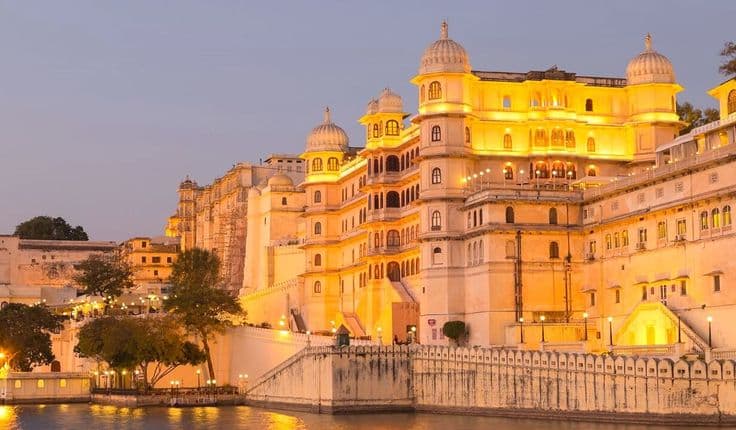

1559. Akbar's grip on Chittorgarh was tightening, and Maharana Udai Singh II did what no other Rajput ruler had risked — he moved the capital. The hills he picked were Aravalli; the moat he picked was a sweet-water lake. The new city he christened Udaipur, and he built it to be defended by water rather than by sandstone walls. Seventy-six generations later, that same dynasty still occupies a wing of the City Palace — the only Rajput royal family whose lineage has never been broken, traced unbroken to 734 CE.
A city designed around water, not walls
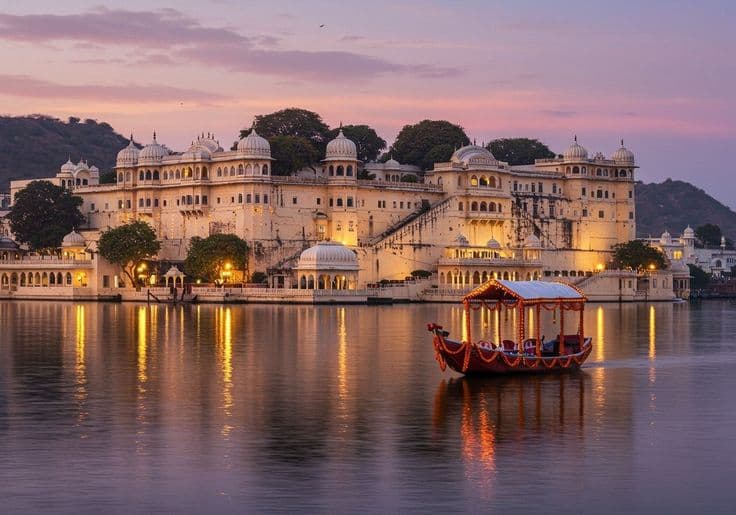
Every other Rajput capital — Jaipur, Jodhpur, Bikaner — was a desert city defended by sandstone walls. Udaipur instead sits inside a necklace of seven interlinked lakes: Pichola (the original, dammed in 1362), Fateh Sagar (1678), Swaroop Sagar, Rang Sagar, Dudh Talai, Govardhan Sagar and Udaisagar. Every maharana of Mewar added a palace on an island, or an arched causeway between hills. The effect is uniquely Indian: a Rajput fortress with a Venetian ground plan.
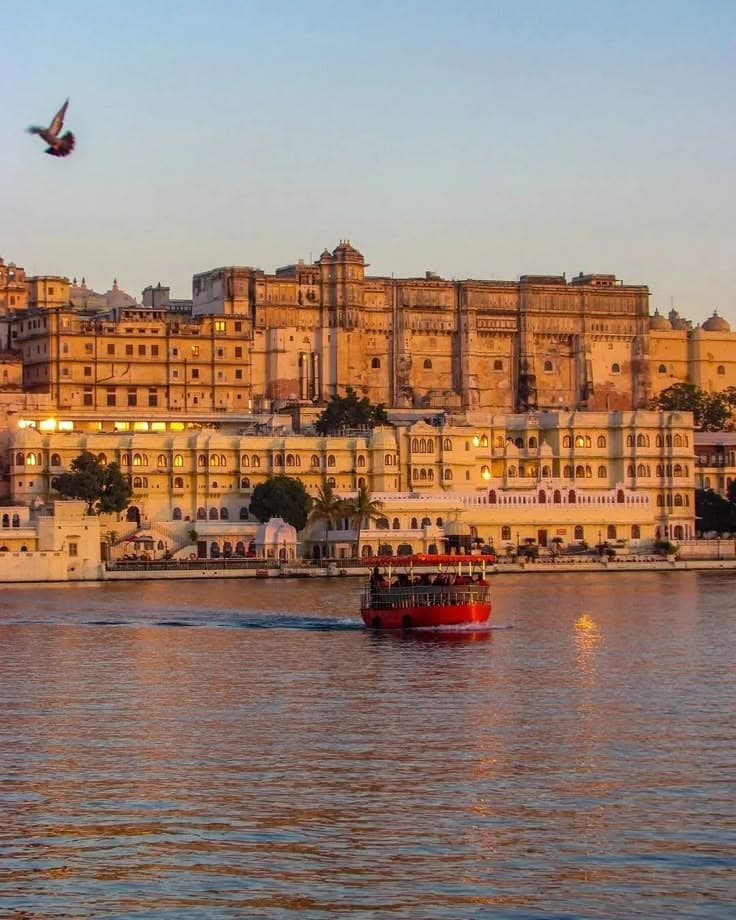
The City Palace is the architectural summary of the city. Begun by Udai Singh II and extended by 22 successor kings over four centuries, it is the largest royal complex in Rajasthan — a labyrinth of 11 interconnected palaces, covering 2 hectares, all facing the lake. Its most famous room, the Mor Chowk (Peacock Courtyard), is lined with 5,000 pieces of coloured glass forming three life-sized peacocks depicting three seasons. The current scion, Arvind Singh Mewar, still performs the Ashwa Puja — the horse-worshipping ceremony — in the same courtyard every September.
Two island palaces: Jag Mandir and Lake Palace
On an island in Lake Pichola floats the Jag Mandir — a 1620 summer palace where the young Mughal prince Khurram (later Shah Jahan, builder of the Taj Mahal) hid from his own father Jahangir for three years. Many scholars believe he first encountered the white marble inlay techniques here that he would later deploy at Agra. The other island, built in 1746 by Maharana Jagat Singh II, is the Lake Palace (Taj Lake Palace Hotel) — a marble pavilion on a 4-acre island. James Bond fans may recognise it from Octopussy.
A three-day route: palaces, temples, art, silence
- Day 1: City Palace (full morning), Crystal Gallery, sunset boat to Jag Mandir from Bansi Ghat.
- Day 2: Jagdish Temple (1651, Vishnu), Bagore-ki-Haveli museum, evening dance show at Dharohar.
- Day 3: Day-trip to Kumbhalgarh Fort (2 hours away) — the Great Wall of India, 36 km of unbroken ramparts, second-longest wall on earth after China.
- Optional extension: Eklingji temple (22 km) — the family deity of the Mewar kings, open only 4–7 pm.
Use Udaipur as the hub of a Rajput route
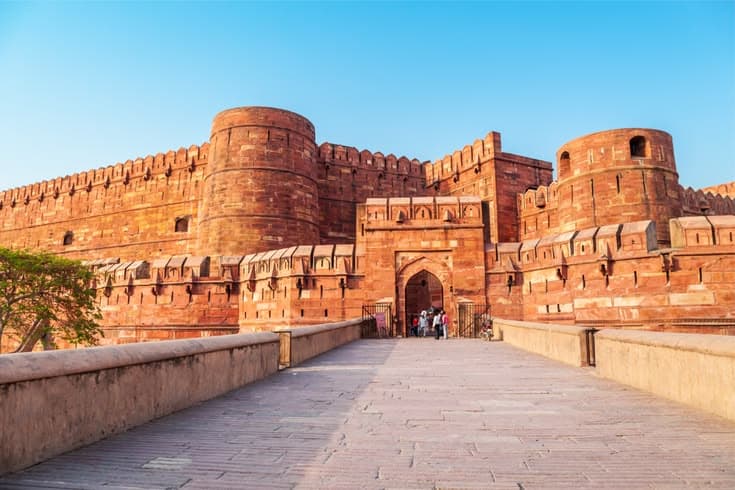
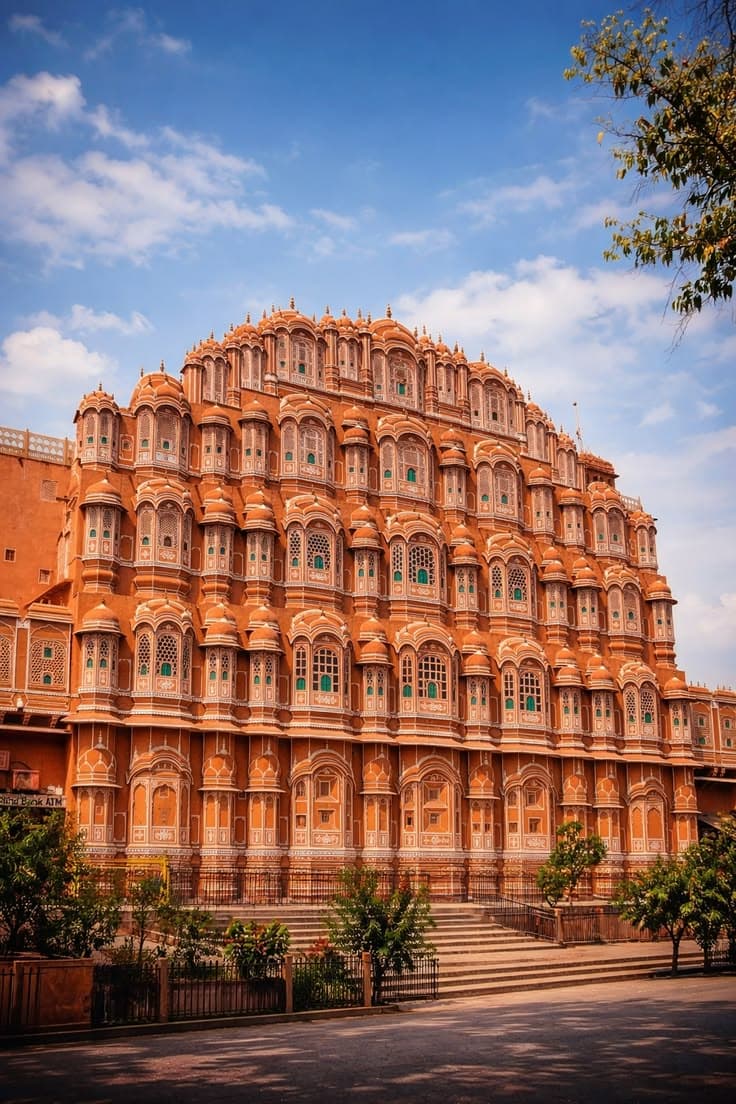
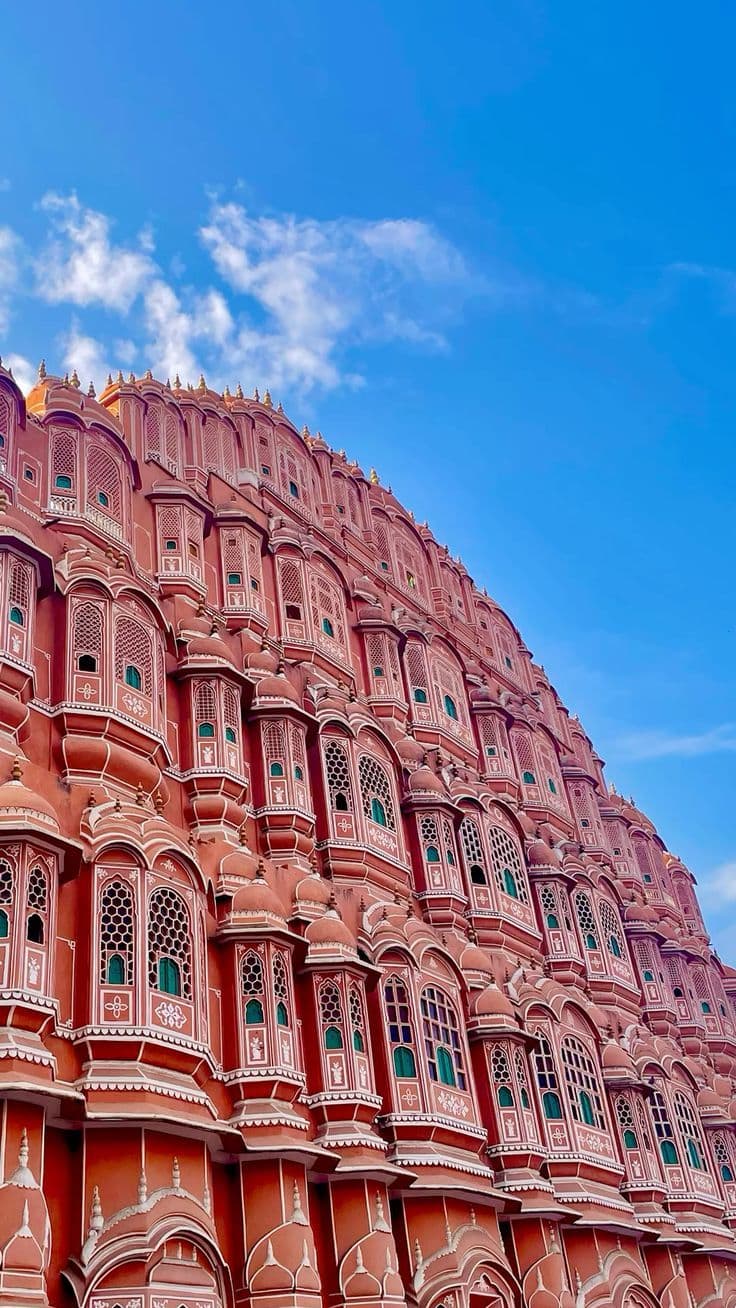
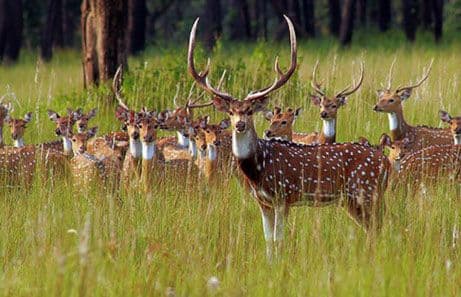
Udaipur is the emotional south of Rajasthan — softer, greener and wetter than the deserts to the north. Combine it with Jaipur (7 hrs by train) for the classic pink-and-white Rajput pairing, or strike west to the white salt desert of Kutch in Gujarat (8 hours). If you want the jungle chapter, Ranthambore tiger reserve is a 4-hour drive towards Jaipur. For the Mughal contrast, follow the route east to Agra Fort. Explore more of the state of Rajasthan or browse Heritage sites.
“Udaipur is the most romantic spot on the continent of India.”

About the author
Rohan DeshpandeHeritage · City · Photography
Pune-based travel writer chasing forgotten railway routes and crumbling forts across the Deccan, with a soft spot for slow trains and stepwells.
More from Rohan DeshpandeFrequently asked questions
- How many days should I spend in Udaipur?
- Three days minimum — two for the City Palace, lakes and old city, one for a Kumbhalgarh or Ranakpur day-trip. Add a fourth night if you want to stay inside the Lake Palace or Jagat Niwas.
- Can you swim in Lake Pichola?
- No. Lake Pichola is the city's drinking-water source and swimming is forbidden. You can take boat rides from Bansi Ghat, Rameshwar Ghat or from the City Palace jetty (₹400–₹1,200).
- What is the best season for Udaipur?
- September to March. October–November is especially lovely: post-monsoon the lakes are full, the Aravallis are green and the Mewar Festival fills the palace courtyards with folk dance.
Discover India
Planning a trip to India?
Most of our editors live and travel across India. Here are some of the destinations and stories worth bookmarking before you go.